
© 2026 Barry Pottle. All Rights Reserved.
Design Concept: The L. Project (www.thelproject.ca)
October 7 – December 23 2021
University of Victoria Legacy Art Galleries
Ungasittuq – Something That is Far Away
A project by Barry Pottle
Ungasittuq is an exploration of distance, space, acceptance and pushing boundaries. This project aims to build a foundation for contemporary urban Inuit art photography within the broader popular understanding of contemporary Inuit art; a new canon so to speak. By placing artwork from UVic’s Inuit art collection alongside my own photographs of contemporary urban Inuit life my aim is to call into question the ways that art museums and galleries typically present contemporary Inuit art and culture.
At the time I started my art practice, the concept of Urban Inuit and art was relatively new and unexplored compared to other Indigenous groups in Canada. The camera allows me to explore connection and continuity with my heritage and culture especially with regard to the contemporary reality of being an Urban Inuk. The term “Urban Inuit” might conjure up the notion that Inuit living in urban centres lose or give up both their identities and connections to their homeland or regions, when in essence Urban Inuit can be ambassadors for their homes, regions and the Arctic and deserve the respect afforded to all Inuit regardless of where they are located.
As the title suggests, my art may be thought of by some as Ungasittuq – something that is far away- from the conventions of “authentic” Inuit art. My aim for this project is for institutions to tear down your walls by giving space and voice for Inuit art photography so that the medium, subject matter, and urban Inuit experience does not seem so far away anymore. I want my work to be both a counterpoint and complement to Inuit artwork that is more often exhibited and marketed in the south. With this project I want to create a broader understanding of contemporary realities.
-Barry Pottle, artist and curator
UVIC website
Being Urban Inuk
I was born in Nunatsiavut, Labrador and now live in Ottawa. The Inuit community in Ottawa is quite large. Population estimates vary from 4,000 to as many as 6,000 people in that city alone. About 30% of Inuit in Canada live outside Inuit Nunangat, the homeland of Inuit in Canada which includes four northern Canadian regions: Inuvialuit Settlement Region, Nunavut, Nunavik in Northern Quebec and Nunatsiavut (in Labrador).
It is important to note that Inuit move south for a variety of reasons, most often out of necessity rather than choice. Inuit people move for employment, medical and educational opportunities and often move with a spouse and family. But moving south has not always been for positive reasons. Given the history of colonialism and assimilation in Canada, there is a very real and unsettling history of Inuit being forced to relocate for medical reasons including TB treatment, to attend residential schools.
The urban Inuit community in Ottawa has a long history of involvement, growth, relationships, activism, cultural and political interaction with the settler population. Over the years, the city of Ottawa has become both a model and community that other urban Inuit look to for inspiration, support and community as all Inuit in urban centres strive to carve out a living and community in southern Canada.
Acknowledgements
In creating the project Ungasittuq I’ve had so such support and encouragement from so many people and family. Starting with Dr. Andrea Walsh, Smyth Chair in Arts and Engagement, and University of Victoria Provost's Engaged Scholar. Andrea’s dedication to art, artists and community (has been both a priority and passion and the support and discussions has) have shaped this project immensely. A huge debt of gratitude and acknowledgement goes out to Caroline Riedel, Mel Granley, Roger Huffman, Gillian Booth and Lorilee Wastasecoot and the staff of the University of Victoria Legacy Art Galleries. Your attention to detail, art, and the project is second to none! To my wife Martha and family, thank you for your continued support, encouragement and wonderful words as I strive to develop my art practice. To my many friends and supporters, if it wasn’t for you all, I would not be here. Thanks for supporting me.
Barry Pottle
Image Captions
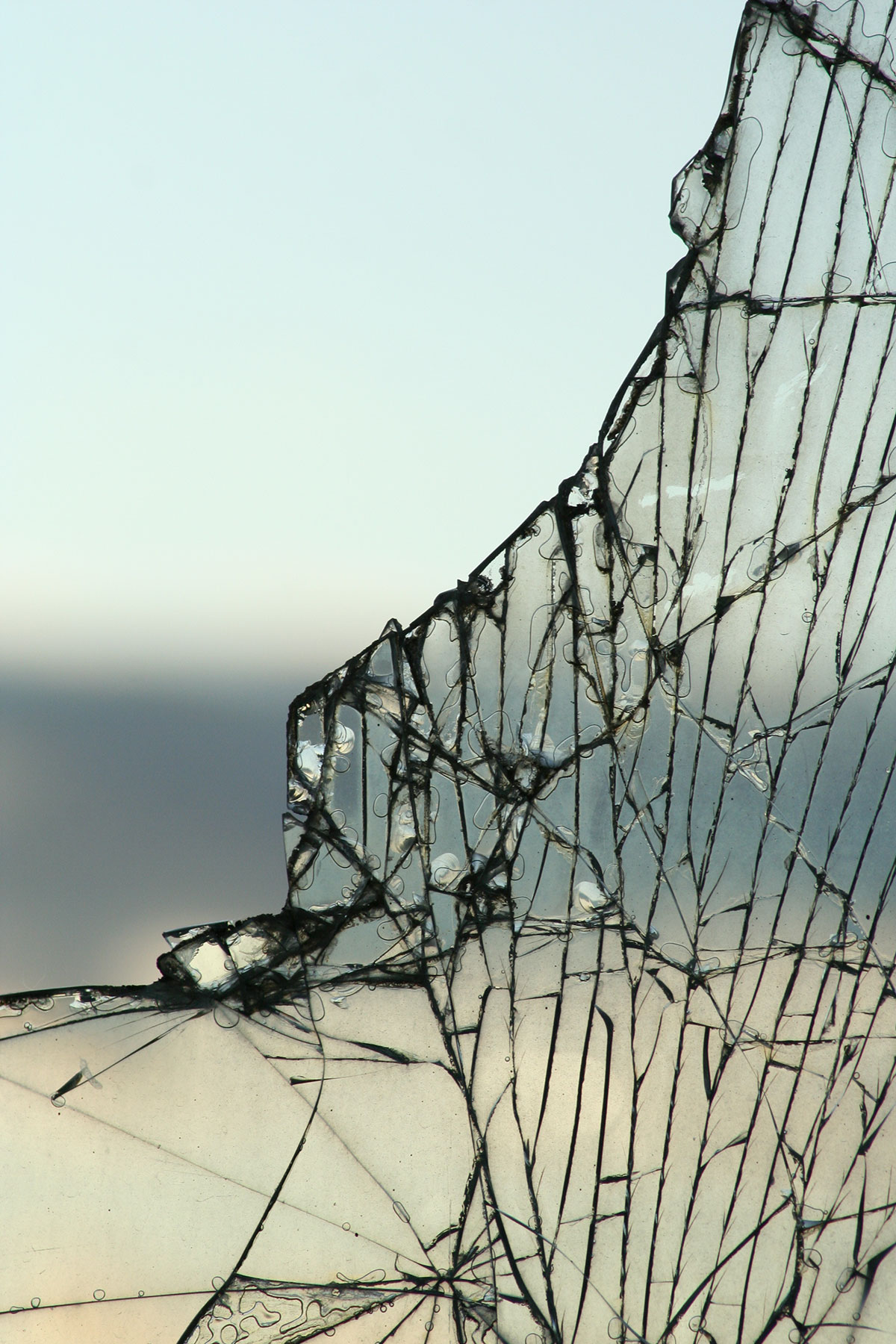
Ungava
2011
Digital Photograph
This image was taken in Whitehorse, YK at the local RV park. It shows a broken window from a wartime American jeep. It reminded me of the coastline along Ungava Bay in Nunavik (Northern Quebec). As well it brought back some historical resonances of American involvement in the Arctic during the Cold War days and the Distance Early Warning Line, a huge stretch of radar stations in the Arctic built to detect Soviet attack.
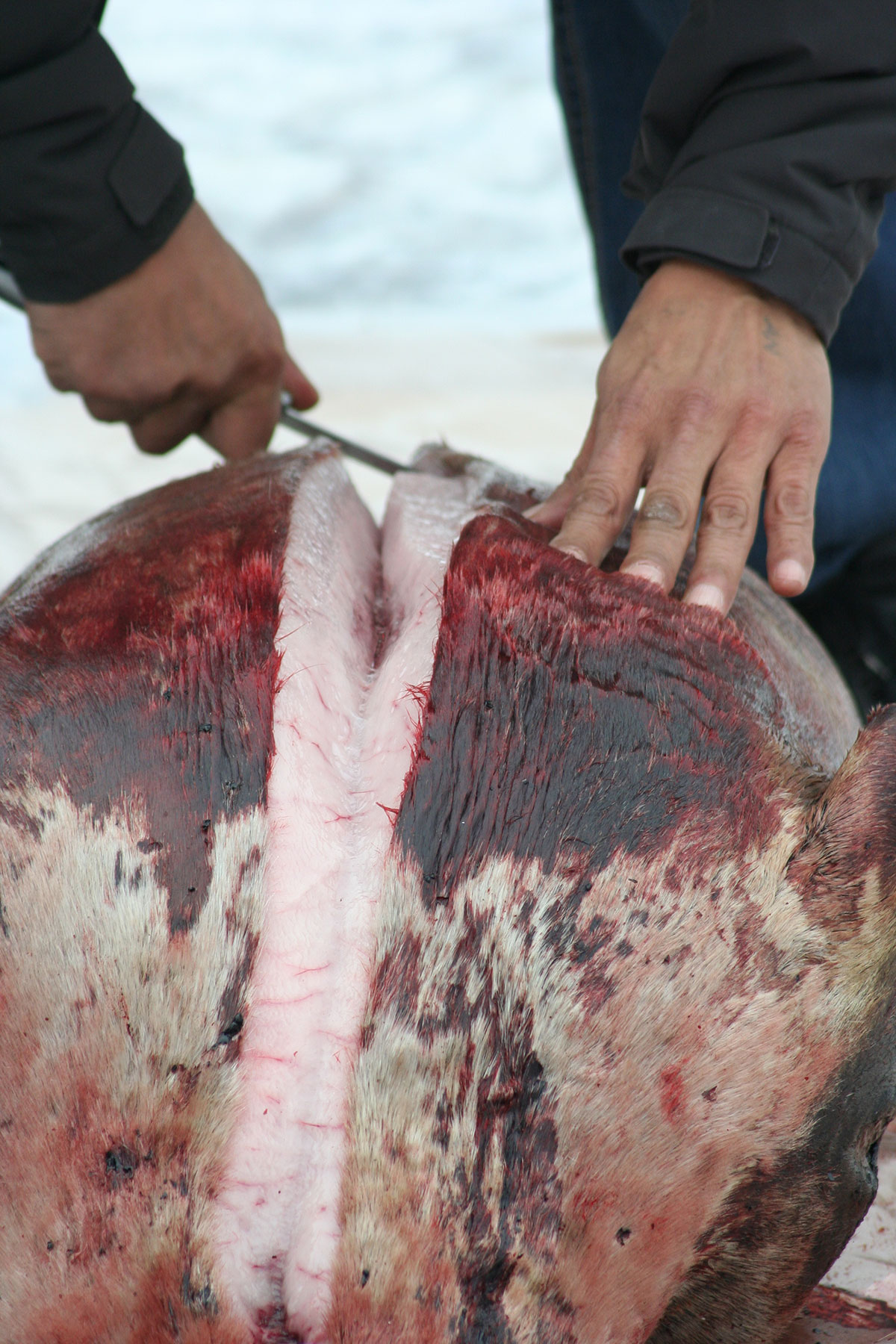
Butchering a Seal during Inuit Day in Vanier (Ottawa)
2013
Digital Photograph
Early in the New Year, the Inuit Children’s Centre hosts Inuit Day in Ottawa. The daylong event is open to Inuit and non -Inuit alike. It is a gathering of the community to celebrate Inuit culture, tradition and practices, and is an opportunity for community members to see and engage with family and friends they may not have seen during the winter months. Here I am providing a visual of one of our cultural practices- the sharing and consumption of Inuit Country Food like arctic char, seal, and caribou.
Silver Spoon II
2013
Digital Photograph
This image was taken during the opening of the Larga Baffin medical residence. The residence is for patients who come down for medical appointments from the Baffin region of Nunavut. It speaks to Inuit Country Food in an urban setting, and it also conveys the message of being humble, Inuit are very humble. Even if someone is perceived as being born with a silver spoon, we must always remain humble and not get some big feeling.
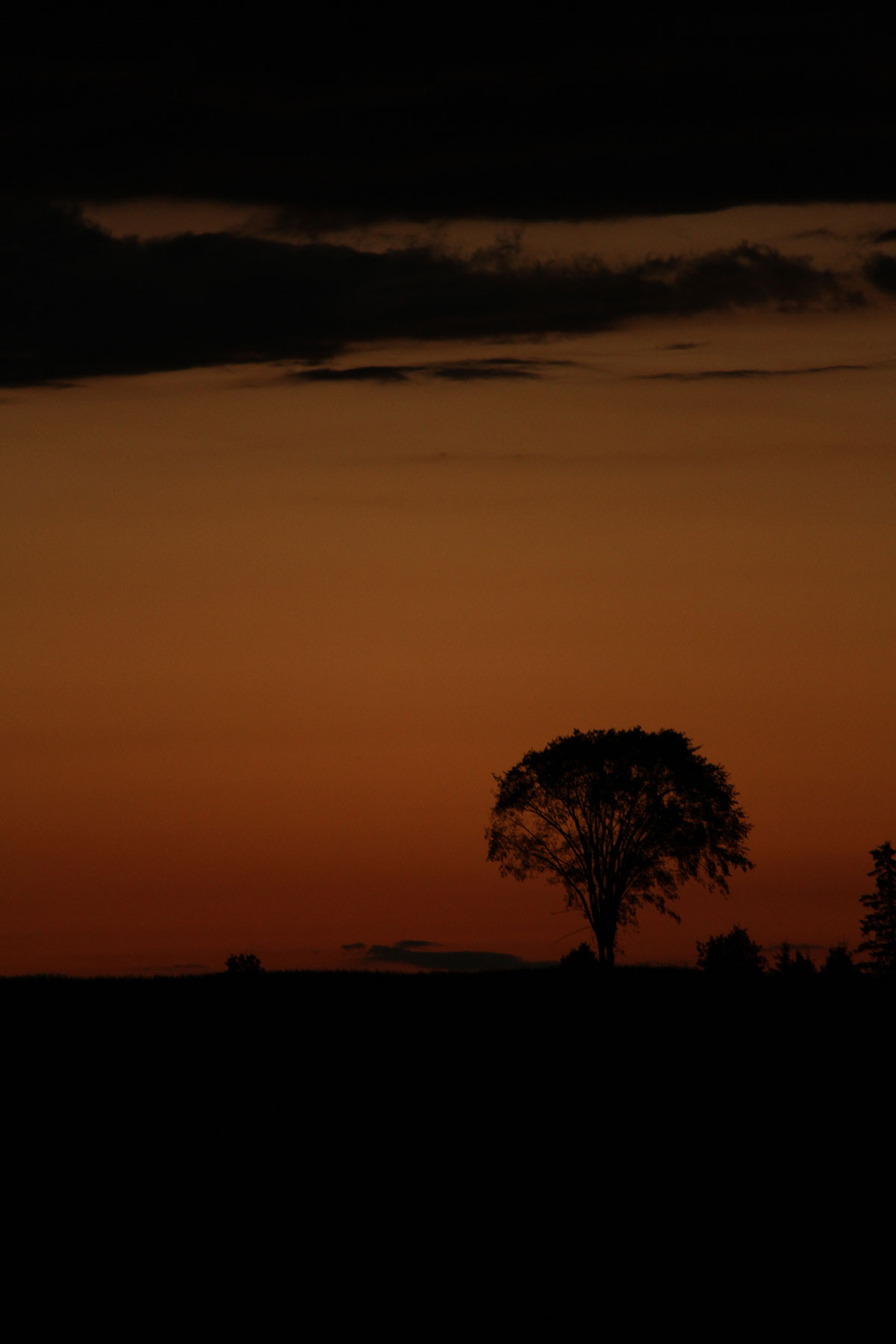
Out of Lapasse
2015
Digital Photograph
This image speaks to my travels in and around the Ottawa Valley. Lapasse is located north of Ottawa. This was our first trip into this area and as always, I take photos of my travels (both as a family and as an artist). Out of Lapasse is, for me, an exercise in technological patience. The late evening sun gave way to a beautiful silhouette and to my surprise it rendered quite well.
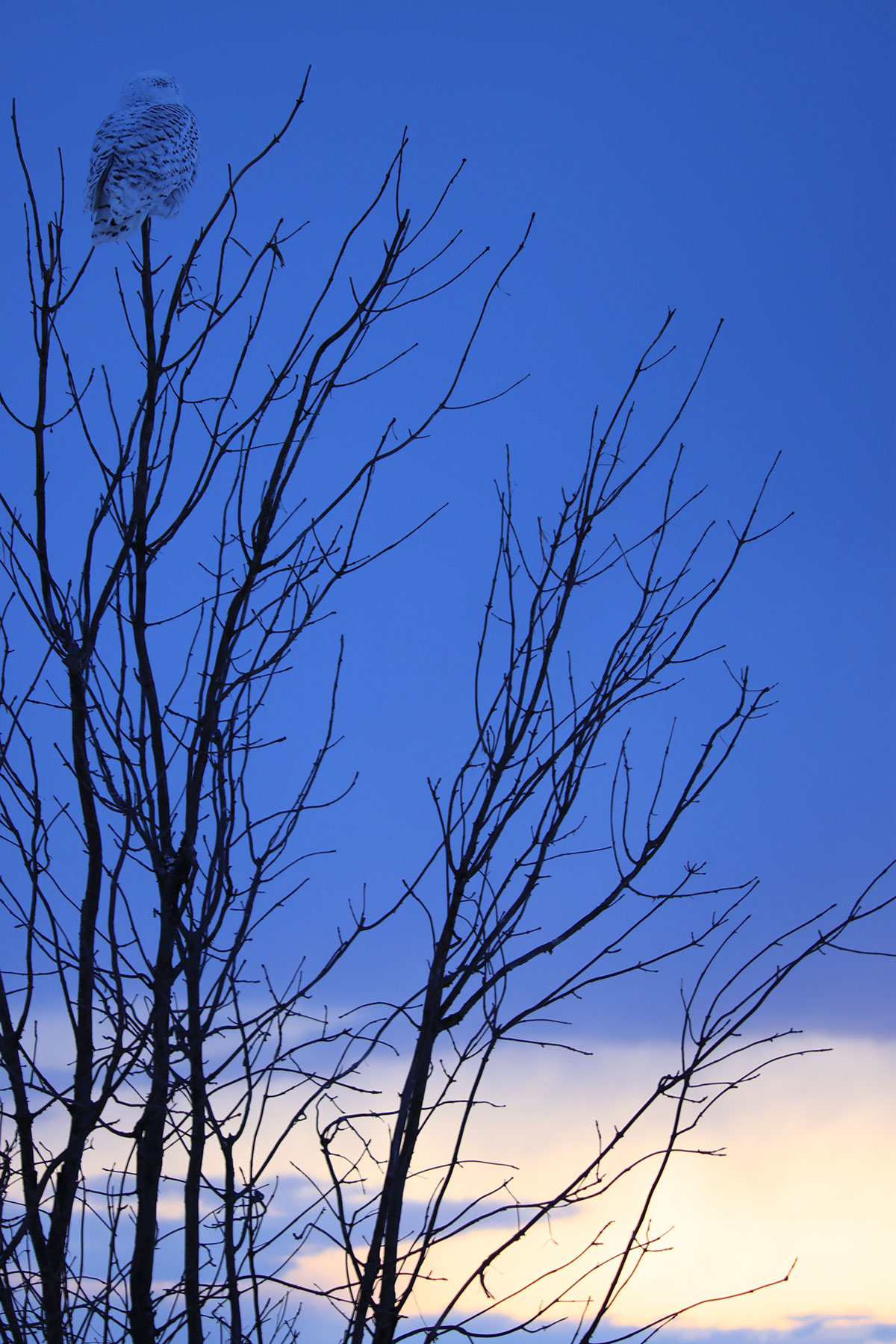
Uppialuk (Ookpik/Uppik/Ukpik/Snowy Owl/)
Uppialuk I, Uppialuk II, Uppialuk III
2021
Digital Photograph
The Ookpik series pertains to the phenomenon of the Ookpik migration in and around Ottawa over the past several years. For a variety of reasons – food, climate and change in migration routes; the snowy owl now makes its home here. I have been trying to photograph it for a couple of years and this majestic bird allowed me to be in its presence (along with a hoard of other photographers). Like Inuit, the Ookpik have temporarily adopted Ottawa as home and migrate to and from freely. My wife and I named this owl Eagleson (referring to a road in Kanata) in humor for the location of its territory.
Uber Qamutik
2014
Digital Photograph
My title is a play on words (I love word play). The photo taken during Inuit Day a few years back, I saw this in the snow and decided to grab a photo of it. So, I get on my belly for the best visual effect, and as a result I think it is a nice image. It pays respect to our culture and creativity (doll and Qamutik or sled) in a lighthearted way. Living in an urban centre challenge me to think artistically and put my own spin on art- this photo is my take on the ride service Uber, Inuk style!
Cultural Ties
2012
Digital Photograph
This photograph depicts cultural iconography in the form of the Qamutik (Inuit dog sled). As part of my Qamutik series, I am showing a very important, sometimes overlooked, and underappreciated mode of transportation for Inuit. For the better of a millennium this humble tool has provided survival and enjoyment to Inuit. Here I am paying homage to the wonderful tool that even in urban life speaks volumes for culture, survival, and joy.
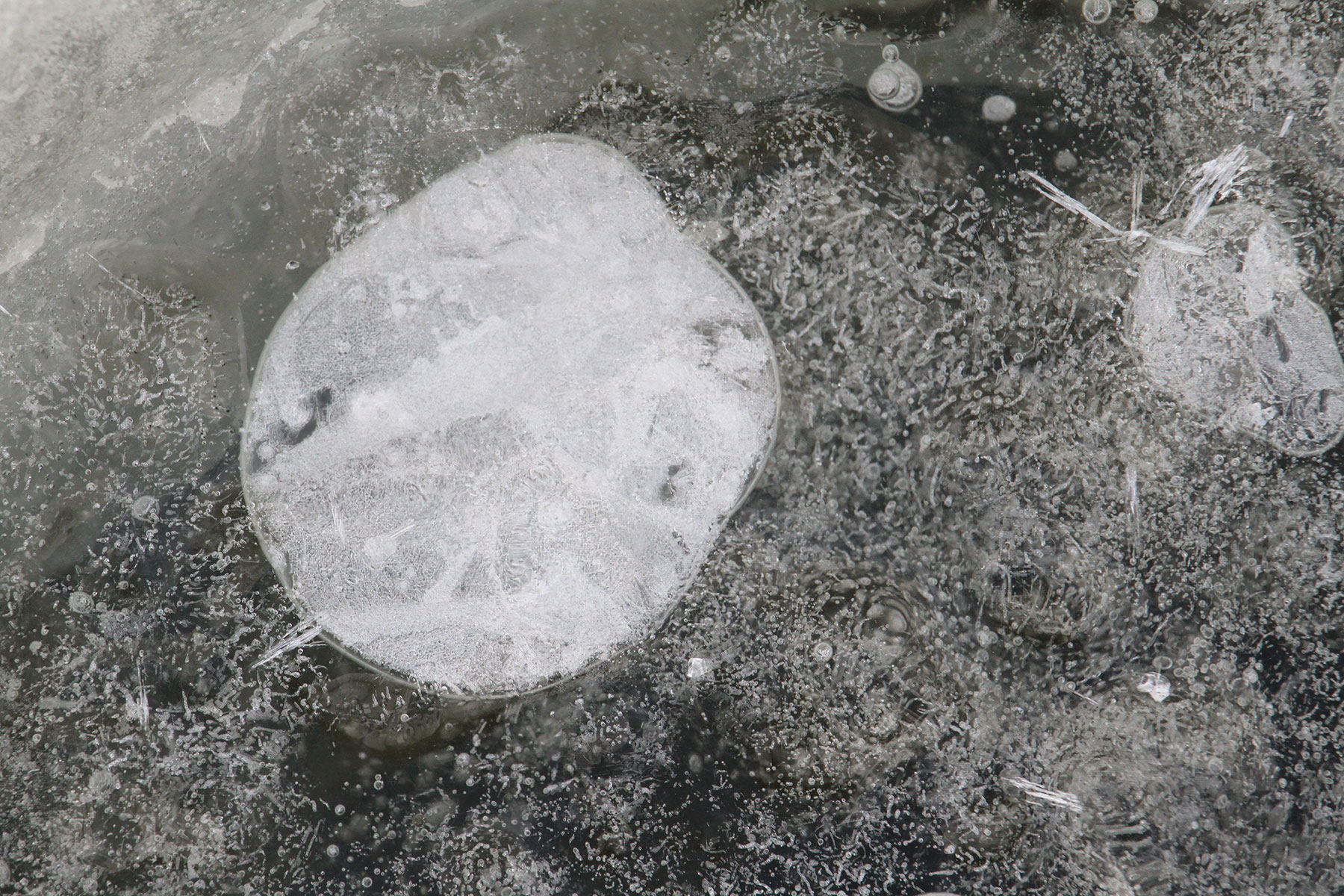
Qilaut as Siku
2018
Digital Photograph
Siku or ice is very important to Inuit. In Labrador we are known Sikumiut- People of the Sea Ice. Siku is important for travel, hunting, and getting out on the land. I carry on that ideology in my art. Although I do not live in my region, I still feel and observe the importance of siku not only from an artistic expression, but I try to relay the messages surrounding climate change and the effects of global warming on the melting of ice throughout the circumpolar world. I love ice in its many forms. This image not only reminds me of a qilaut (drum), but also speaks to the memory of my friend Ruby who, like me, loves bubbles in ice.
Hunter (Does it Hurt Billy)
2020
Digital Photograph
While on vacation last year I was observing the blue heron (named Dracula by my friend’s family) that makes it home on Clear Lake, south of Ottawa. I wanted to see if I could capture its hunting patterns, so after observing and photographing him for several hours, I finally managed to capture Dracula spearing his prey. Herons are predators and Hunter also pays respect to the traditional Inuit practices of Pilimmaksarniq/Pijariuqsarniq; the development of skills through observation, practice and effort). Inuit culture is rooted in hunting, and it sustains Inuit life and culture. These cultural practices are also carried and practiced by Inuit in urban settings.
Igalâk (Igalaaq)
2014
Digital Photograph
Igalâk (window) depicts the notion that when researchers, academics and others came north to study Inuit, they did so from mostly inside the iglu. So, the perspective from inside the iglu in my view is one sided. A few years back, while I was attending the ice sculpture competition at Winterlude (Ottawa’s winter festival) one of the carvers was preparing to work on his sculpture. The moment brought me back to looking out from within the iglu, so I reversed the idea to look through the igalâk and observe Qallunaat (white people) in their setting.
Trudy Metcalfe-Coe
2013
Digital Photograph
Trudy Metcalfe-Coe is a long-time community member and friend. Trudy is a strong independent Inuk woman, a leader and inspiration within the Inuit community in Ottawa. There is nothing too large or small that she will not try. Her most recent endeavors include developin her seamstress skills and being recognized as an Inuk Chef. Here I am giving voice and recognition to an actual individual, an Inuk woman and not just a catalogue or collections number. Inuit are here, we are alive and doing well and succeeding and are contributing to the community overall.
David Serkoak
2014
Digital Photograph
David has been very instrumental in bringing back the qilaut (drum) both in performance and creation. Here, David is performing on Parliament Hill during World Suicide Prevention Day. David is an avid teacher, and he gives freely of his time and knowledge about the qilaut. In this performance he is accompanied by his grandchildren, who, like their ataatatsiaq (grandfather), are promoting and keeping alive cultural traditions and in doing so they are play a key role ensuring culture is passed on.
In the Moment
2010
Digital Photograph
In the Moment is one of my earliest artworks depicting throat singing. The image was taken during Inuit Tapiriit Kanatami’s (ITK) very first fundraiser called “A Taste of the Arctic.” ITK is the national organization to protect and advance the rights and interest of Inuit in Canada. Katajjaq (throat singing) is a friendly competition traditionally performed by Inuit women, though Inuit men are trying their hand at throat singing these days as well. The singers create songs that mimic the sound of nature and animals. Here I wanted to see if I could capture both the sound and movement of Katajjaq using photography. Performing here is the late Inuk Elder Suzanne Singoorie (Nunavut/Ottawa) alongside Charlotte Carleton (Ottawa).
CLICK ON IMAGES TO VIEW LARGER